Arrival 11:45 – Departure 13:00.
Distance 1.1 Miles.
22°C mostly sunny.
Originally I was planning to head to Shoreham, for a walk along the river. But as I was driving past Brooklands Park I had a good feeling about it so I pulled in at around 11:30am. I had no rigid plans on what I would have liked to see, but as always, birds and butterflies were at the forefront of my mind.
Waterfront Waterfowl
Walking down the path below the playground, I spotted a butterfly fluttering along the treeline, thankfully it landed just long enough for me to get a couple photos and confirm its identity; a beautiful Speckled wood.
I continued down the path into the opening and was greeted with a mass of gulls, ducks, rails, and, perched on one of the islands in the middle, a single Grey heron preening. The gulls included species such as Herring, Black-headed, and even two Great black-backed, which are always impressive to see, being arguably the largest gull species in the world. The waterfowl were mostly the regulars you would expect of the area, Mallards, Little grebes, Coots, Moorhens but the real stars for me were the pair of Tufted ducks. I managed to catch a glimpse of the males’ subtle purple iridescence, which was just about showing through his eclipse plumage.
Mimics and Mothers
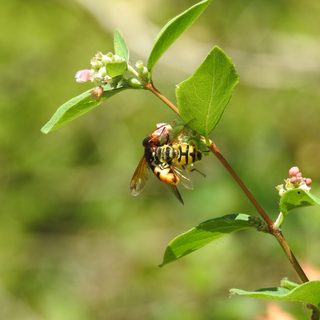
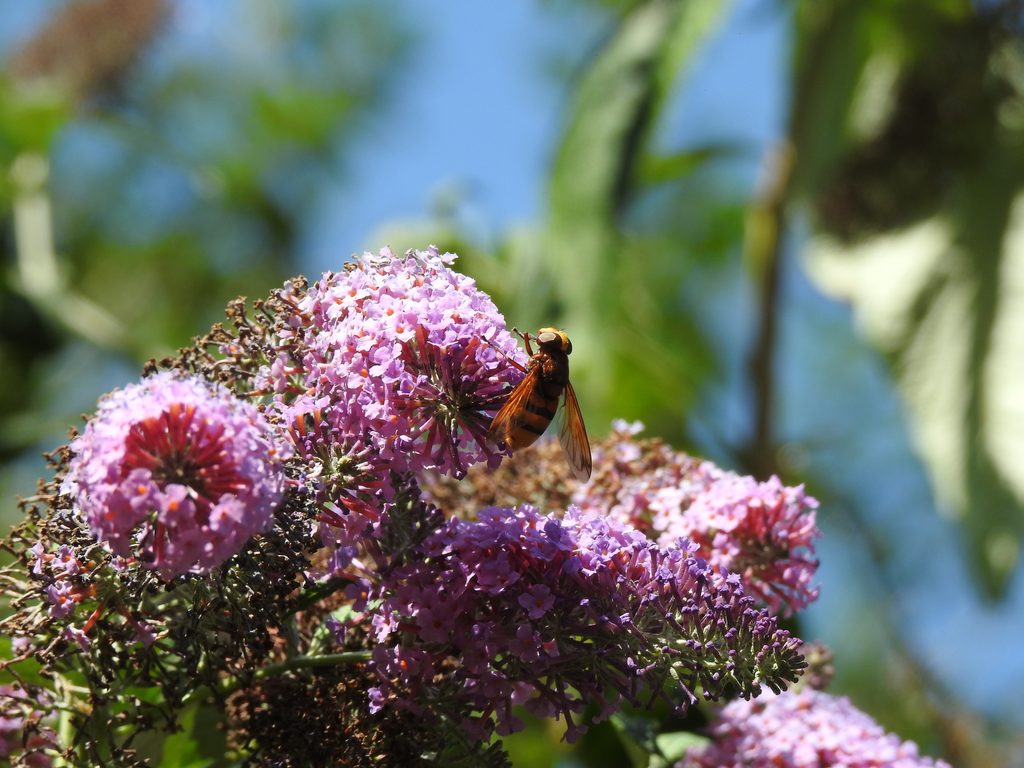
Passing the pond, I stopped by a Buddleia, known as the ‘Butterfly Bush’. This time I was surprised to see what I thought was a large hymenopteran, thinking at first it was a hornet. I raised my camera and zoomed in, once focused, I noticed it was actually a Hornet mimic hoverfly! A species I had never seen before, the largest species of hoverfly in the UK, and an amazing show of mimicry. Joining the Hornet mimic was one Red Admiral butterfly, who posed well for some photos.
Continuing to the boardwalk I got better views of the Grey heron and the various waterfowl. A Reed warbler darted between the reeds in front of me, too fast for a photo, but lovely to see nonetheless. It was great to see the Mallards are onto their second brood of young, with their fluffy parade following their mother around the pond.
Nearby Neighbours
After leaving the boardwalk a chattering of Starlings called from a large bramble patch. As I walked back along the paved section behind the boardwalk, there were swathes of Grasshoppers flying and jumping through the dry grass, none of which sat still long enough for photos or identification.
Further up the path, I found a quiet bench surrounded by lots of dry grass, the perfect microhabitat to spot insects. I sat down and began looking around to see what I could spot. The first thing that caught my eye was a mid-sized bee buzzing close to the ground. I watched her for a little while before she landed and started excavating the sandy soil. This was a female Common pantaloon bee (also known as the Hairy-legged mining bee), a solitary species known for their oversized orange pollen brushes on their hind legs. This individual was digging in the sand to make her nest and was very obliging, letting me get a number of photos and videos.
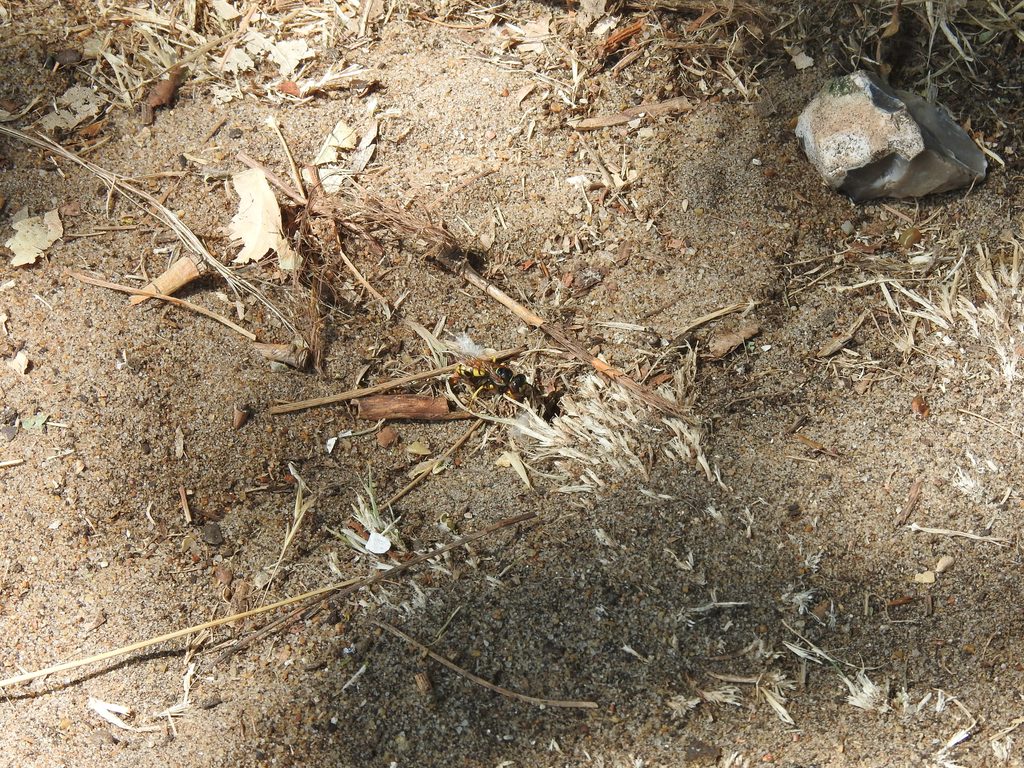
Just a foot or so away was a divot in the sand with loads of what I believe to be Four-banded digger wasps. While this is a solitary species, they often make neighbourhoods or aggregations in spots that are suitable. While watching, photographing and recording these wasps, I spotted a Small skipper flitting around the dry grass. Once I had finished watching the small bees and wasps, I looked around and noticed all the Pantaloon bee holes and the spoil from them, there must have been at least five or six in a ten meter radius from the bench!
Marauders and mates
After noting down my sightings so far I continued my exploration up a small hill under a conifer tree where I ran into a wasp species with one of the coolest names in the natural world, the European Beewolf. One of the UK’s largest solitary wasp species, the females of which hunt honeybees to feed to their larvae. I actually managed to get a photo of a female carrying a kill into its burrow!
Just along from the Beewolf, there was a patch of brambles with five or more Gatekeeper butterflies around it, two of which were mating. While Gatekeepers are a fairly common species, I still find them absolutely beautiful and fascinating to watch.
As I came around past the brambles there was a large patch of Convolvulus with two Small white butterflies drinking nectar from the flowers along with many bees, including an Early bumblebee.
A Patch for Pollinators
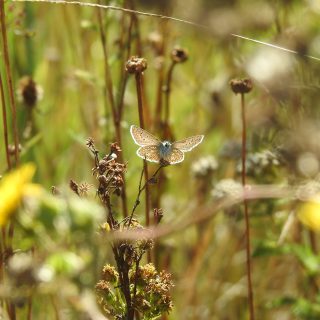
Next I stumbled upon a planted garden area I had absolutely no idea was there with some pollinator favourites, such as Verbena, Borage, Lavender, and a few Achillea species. On the adjacent lawn, I spotted a blue butterfly, which I watched for about twenty seconds before it settled on a White clover, where I got a photo and confirmed it was a superb male Common blue, easily one of my favorites!
Near the lawn, I noticed loads more Pantaloon bee holes and spoils. Interestingly, a Honeybee was sitting on the excavated soil. Honeybees possess an incredibly powerful sense of smell and will occasionally raid Pantaloon bee burrows to steal water or underground nectar reserves, or gather the fine excavated sand to mix with resin for their own nest repairs.
Heading down a slope into a new section of this garden area, I encountered two more huge Hornet mimic hoverflies, along with many other species of pollinators, including more Honeybees, a Batman hoverfly (also known as the Yellow-haired sunfly) and several Large white and Small white butterflies.
Fabulous Finale
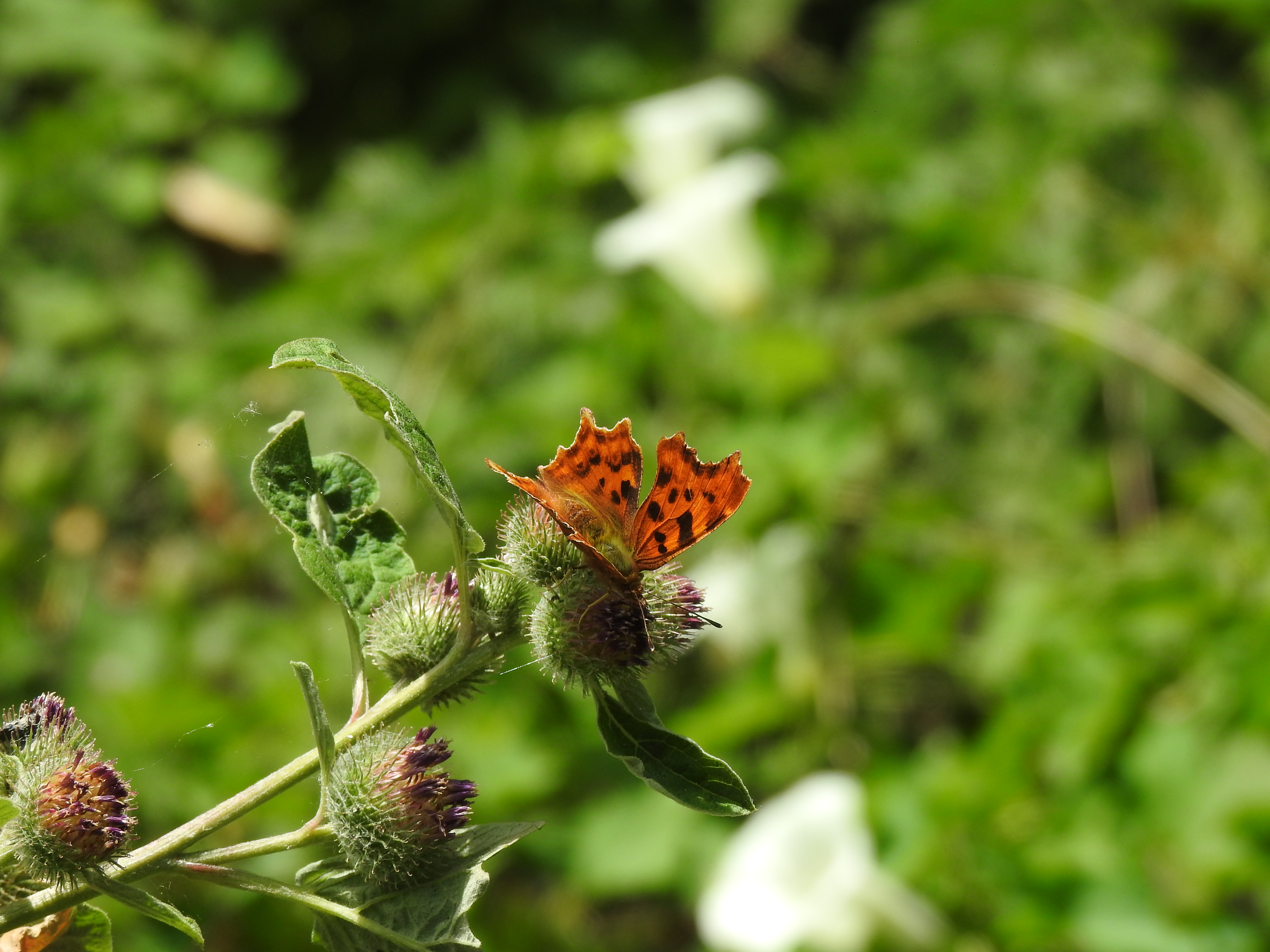
As I followed the path I saw a few patches of Lesser burdock, which were absolutely alive with insects. I spent a good fifteen to twenty minutes captivated by the diversity around this one plant species; Small and large whites, Meadow browns, Commas, Red admirals, one Speckled wood, Gatekeepers, Hoverflies, and Bees! It truly was an amazing experience to see such biodiversity just meters away from a children’s play park.
Heading back to the car, I rounded a corner where I could see my car and I was recounting my walk, thinking about how amazing it had been for just over an hour. This is when I saw a small flutter of blue. Excitedly expecting another Common blue I watched and waited for it to land, and am I so glad I did!
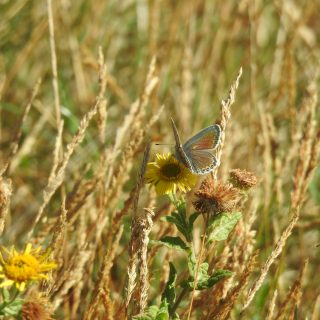
It turned out to be a Holly blue, a species of butterfly I had never seen before, despite them being fairly common, I hadn’t come across one before and they are just so pretty. This individual sat beautifully on a bramble leaf and let me get some nice, close up photos of it before it flew off. What a way to wrap up a spontaneous trip!
Notable or identifiable species list
Birds
- Grey heron
- Herring gull
- Black-headed gull
- Great black-backed gull
- Mallard (with young)
- Tufted duck
- Little grebe
- Coot
- Moorhen
- Reed warbler
- Starling
Insects
- Speckled wood
- Small skipper
- Gatekeeper
- Small white
- Common blue
- Large white
- Meadow brown
- Comma
- Red admiral
- Holly blue
- Grasshopper (unidentified species)
- Hornet mimic hoverfly
- Common pantaloon bee (Hairy-legged mining bee)
- Four-banded digger wasp
- European beewolf
- Early bumblebee
- Honeybee
- Batman hoverfly (Yellow-haired sunfly)
Plants
- Buddleia (Butterfly bush)
- Convolvulus
- White clover
- Verbena
- Borage
- Lavender
- Achillea
- Lesser burdock
- Bramble


More from us
Have a look at our other blog posts!
A Pallid Harrier!? 15/09/2026
Arrival 10:00 – Departure 11:30. Distance 1 mile. 20°C Overcast When I woke up this morning I saw there was a juvenile…
Read the post →From the gallery