
Arrival 9:30 – Departure 11:30.
Distance 1.85 miles.
17°C Partial cloud.
As my wife needed to go to Hove for work in the morning I thought I would try and spot some curlew sandpipers seen the previous day. Although the tide was at its peak meaning it wasn’t really suitable for waders I decided to see what was around anyway. I had also heard of some wheatears at Shoreham fort so the plan was Shoreham toll bridge first, then the fort. I parked at the Adur Memorial Recreation Ground car park as I normally park at the old toll bridge and fancied a change. Today was more about birds than insects but as always, they are a beautiful and welcome addition to any trip.
Wonderful Waders
As I wandered down the path, there wasn’t too much going on yet other than House sparrows and a single Dunnock. I don’t see Dunnocks as much as you’d think, they’re fairly elusive considering they’re one of the most common birds here, with an estimated two and a half million pairs in the UK, so it’s always a treat to spot one.
After rounding a corner near the play park, I saw two beautiful Little egrets hunting along the marshes by the side of the river. A minute or so later, I heard a high-pitched “seep” call from under the railway bridge and spotted a lovely Common sandpiper. A charismatic little bird, always bobbing its body as it walks, known as teetering.
Butterflies Blittering
Along the sides of the path there were scattered patches of Bristly oxtongue still in flower, attracting insects. The first butterflies I spotted today were some Common blues flitting from flower to flower, rarely sitting still long enough for a photo.
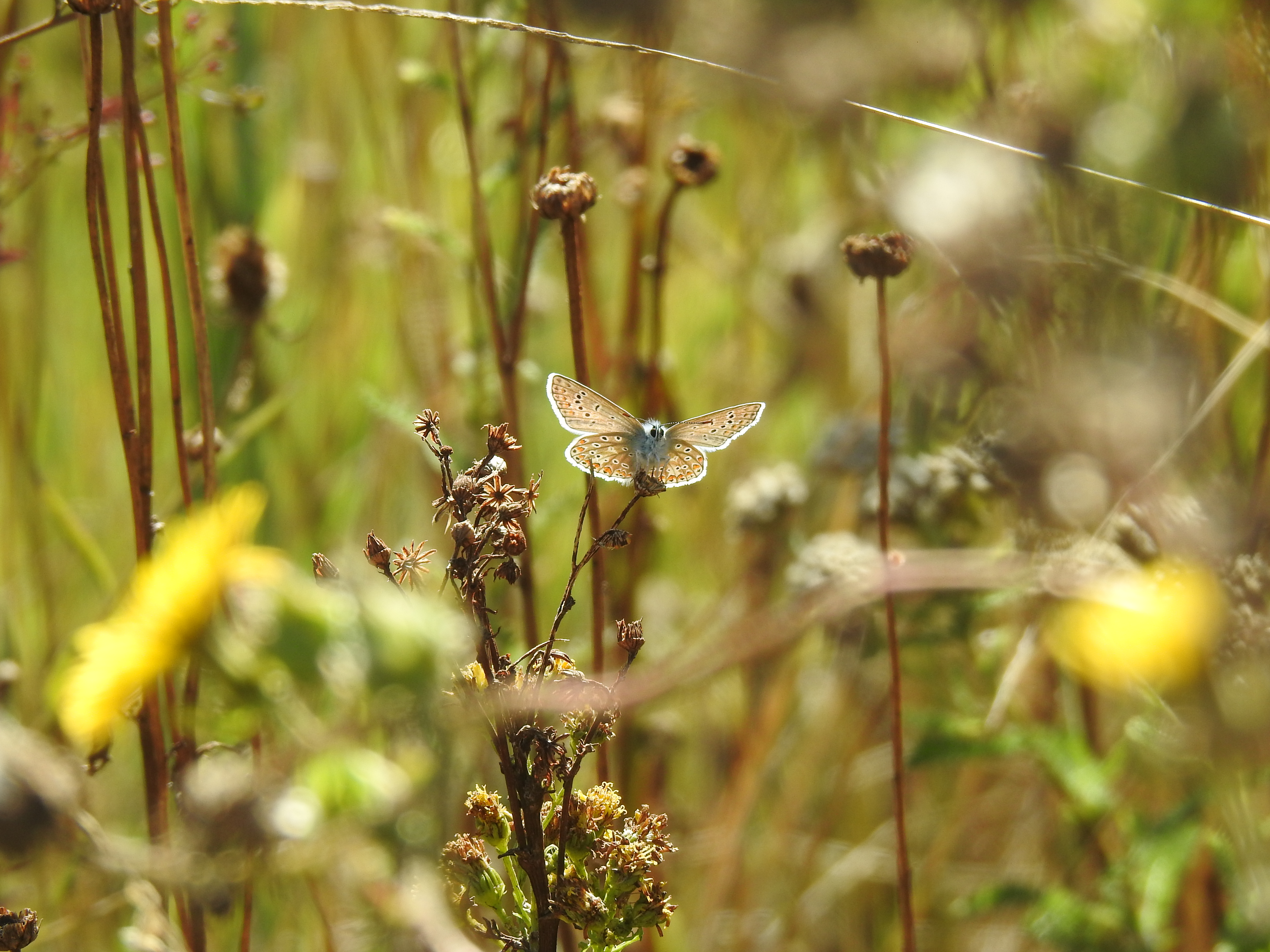
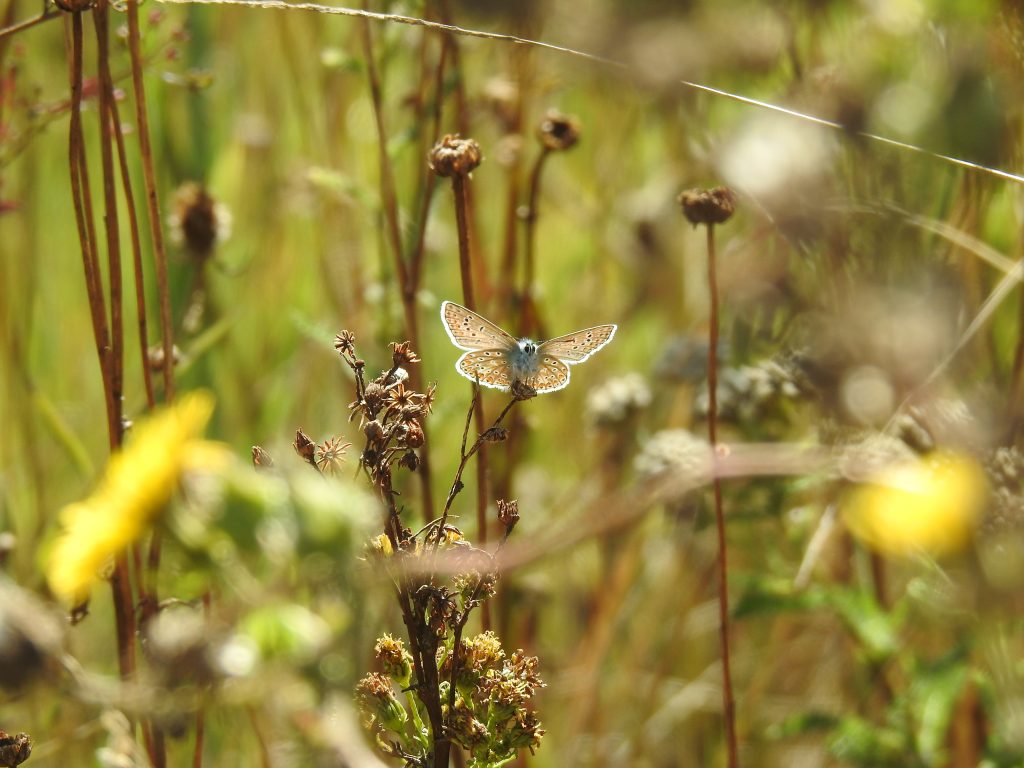
I then looked out towards the marshes again and saw a bright yellow butterfly darting around, once it landed I quickly got my binoculars on it and identified it as a Clouded yellow. The longer I looked, the more butterflies I spotted, loads of blues and around seven Clouded yellows. I got a couple shots of a few individuals, including a female Common blue from the underside, which turned out to be one of my favorite photos I’ve ever taken.
Pipits and Perplexing Butterflies
As I passed the water pumping station, I was focusing on the rocks nearby as there had been kingfishers reported recently. I was interrupted from the rocks by some fast, metallic calls coming from right above me, a flock of six Meadow pipits. Meadow pipits always astound me with how long their hind claw is, up to fourteen millimeters! This extra long claw allows them to balance and grip well on the soft, uneven ground and grass tussocks they forage on.
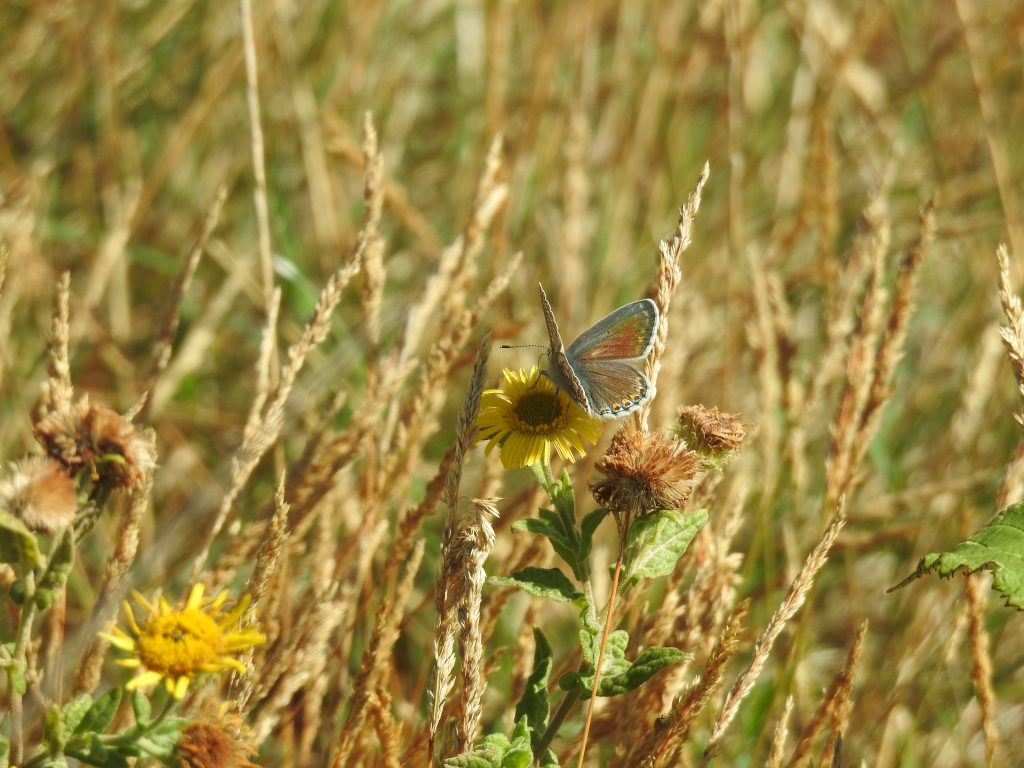
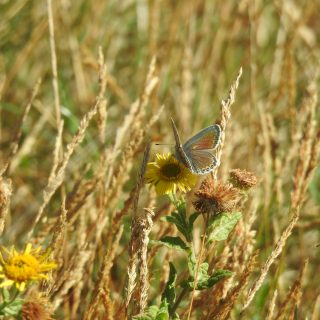
Just coming up to the next corner I spotted another group of butterflies, blues and Clouded yellows again. One blue landed on some Fleabane and it caught my eye, looking much more green than I’m used to. I rattled off some photos in case it flew off, but it was very obliging and it stayed long enough for me to get some good photos. Now, here’s the perplexing part, it was a female of some species of Polyommatinae, showing slight chequering on the wing margins, blue, black and orange ocelli and that amazing, brown, green, blue colouring to the upperwings. I am about eighty percent sure it was a female Adonis blue, but if any experts are reading this and see the pics, please let me know if you disagree.
Stalking Shorebirds
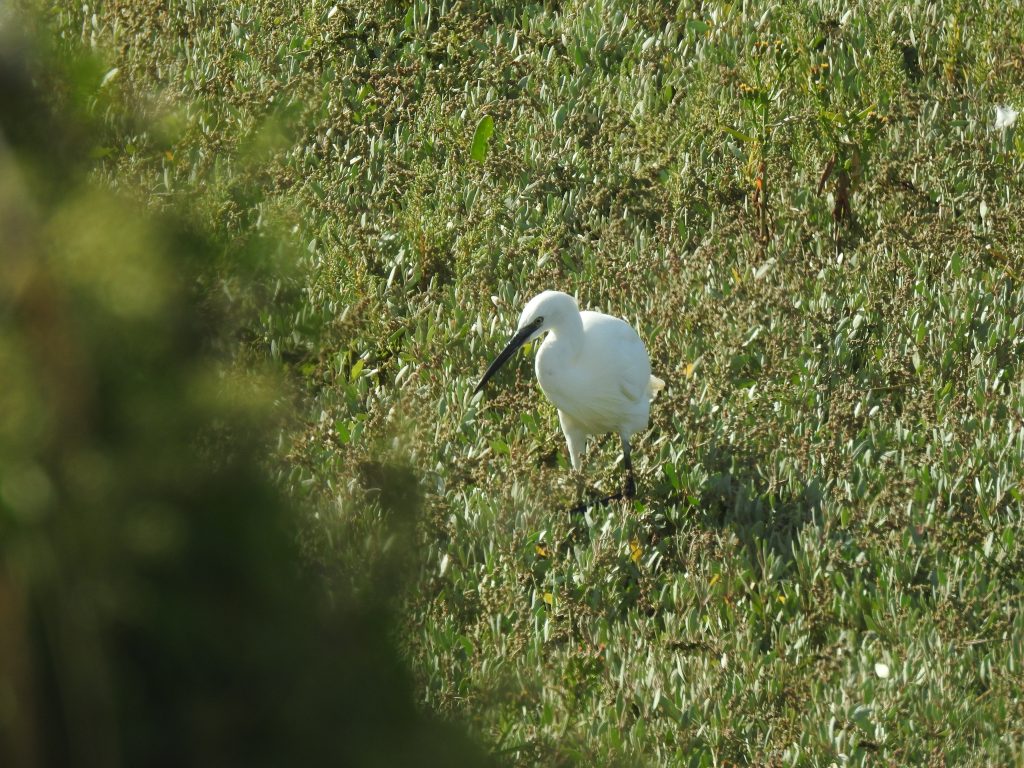
Over the bridge I decided to have a seat on a bench, where I had a lovely view of another Little egret, hunting amongst the Sea purslane. Slowly stalking its prey, likely small shore crabs, ditch shrimp, or trapped juvenile fish. I got a couple photos, only one turned out good enough though, you can see how focused the Little egret is, watching for the slightest movement, ready to lunge.
I then just about caught another Common sandpiper flying past, showing the prominent white bar running across the wing and the brown center of the tail flanked by white outer tail feathers.
Dragonflies and Distant Flocks
Walking past the trees and bushes a bit further along I spotted a dragonfly darting around, it ended up landing on a dead twig and posing quite beautifully. I took a few photos before it flew off and I later identified it as a male Common darter, one of the most widespread dragonflies in the UK.
There wasn’t much action until I arrived at the car bridge, where there was a gap in traffic so I crossed the road to get a view over the large saltmarsh. Just as I got to the other side I saw a small brown bird flying along the river and it landed on top of a boat. Upon closer inspection with my scope, it turned out to be a single Turnstone, one of the most beautiful shorebirds in my opinion.
Looking out across the saltmarsh I saw four more Little egrets, scattered seabirds such as Herring gulls and Black-headed gulls and a flock, or often known as a “Fling”, of Redshanks. After watching through my scope for a few minutes I headed back to the car to drive to Shoreham Fort.
Found at the Fort
On my way to the fort, I was thinking about how unlikely it would be to see the birds I was aiming for, Wheatears. These migratory birds have eluded me the past few years, despite trying countless times to see them on their migration back to Africa, I have never been successful. Despite my previous luck, I was hopeful so as I pulled into the car park I was already trying to spot them.
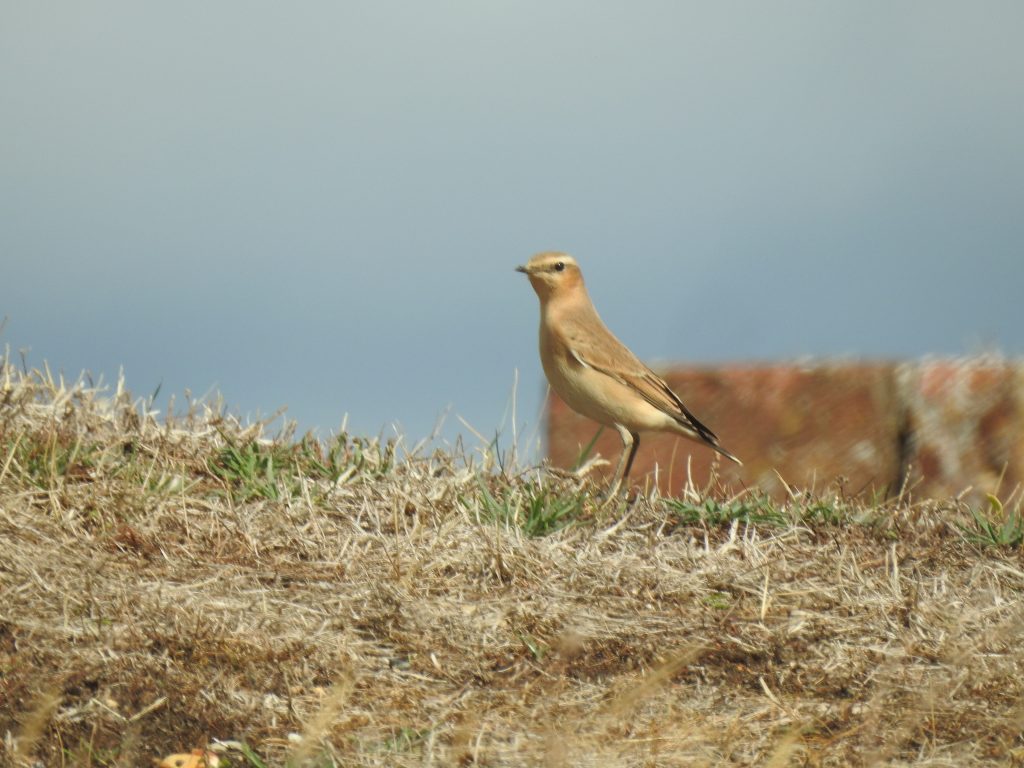
After putting all my gear back on, I headed round the fort. I started on the West side and walked around to the East, intensely watching the fort for any movement. Just as I came round to the front of the fort, I spotted a small bird on a railing, my heart immediately began to race, I fumbled to grab my binoculars, and locked on to it. A Wheatear finally! A stunning bird, clean brown and orange plumage with a white supercilium perched on a black railing in front of a beautiful blue sky, an amazing first sighting of one of my bogey birds.
They are as beautiful as they are impressive, despite only weighing about twenty five grams, they have an amazing migration. While we do get some Wheatears nesting and breeding in the UK, some will fly to and from North Africa, a journey of around four thousand miles. But the more impressive statistic is the birds which breed in Alaska and eastern Canada before flying back across Eurasia, to spend the winter in sub-Saharan Africa, a round trip of eighteen thousand miles. The individuals I saw at the fort were likely ones who had bred in Greenland and are on their seven thousand mile trip back to Africa for winter, Shoreham being their last stop in England until next year.
A lifer for me, bringing my species total up to one hundred and seventy two species in under two years.
Notable or identifiable species list
Birds
- Little egret
- Common sandpiper
- Redshank
- Herring gull
- Black-headed gull
- Meadow pipit
- Wheatear
- Turnstone
- Dunnock
- House sparrow
Insects
- Common darter
- Common blue
- Adonis blue (possibly)
- Clouded yellow
- Red admiral
- Bee species
Plants
- Bristly oxtongue
- Fleabane
- Sea purslane


More from us
Have a look at our other blog posts!
A Pallid Harrier!? 15/09/2026
Arrival 10:00 – Departure 11:30. Distance 1 mile. 20°C Overcast When I woke up this morning I saw there was a juvenile…
Read the post →From the gallery
Leave a Reply